
VOL. XII · ISSUE 04 · FIELD NOTES
FIELD NOTES · CES 2026
A working designer’s annotated tour of what landed, and what we’d steal.
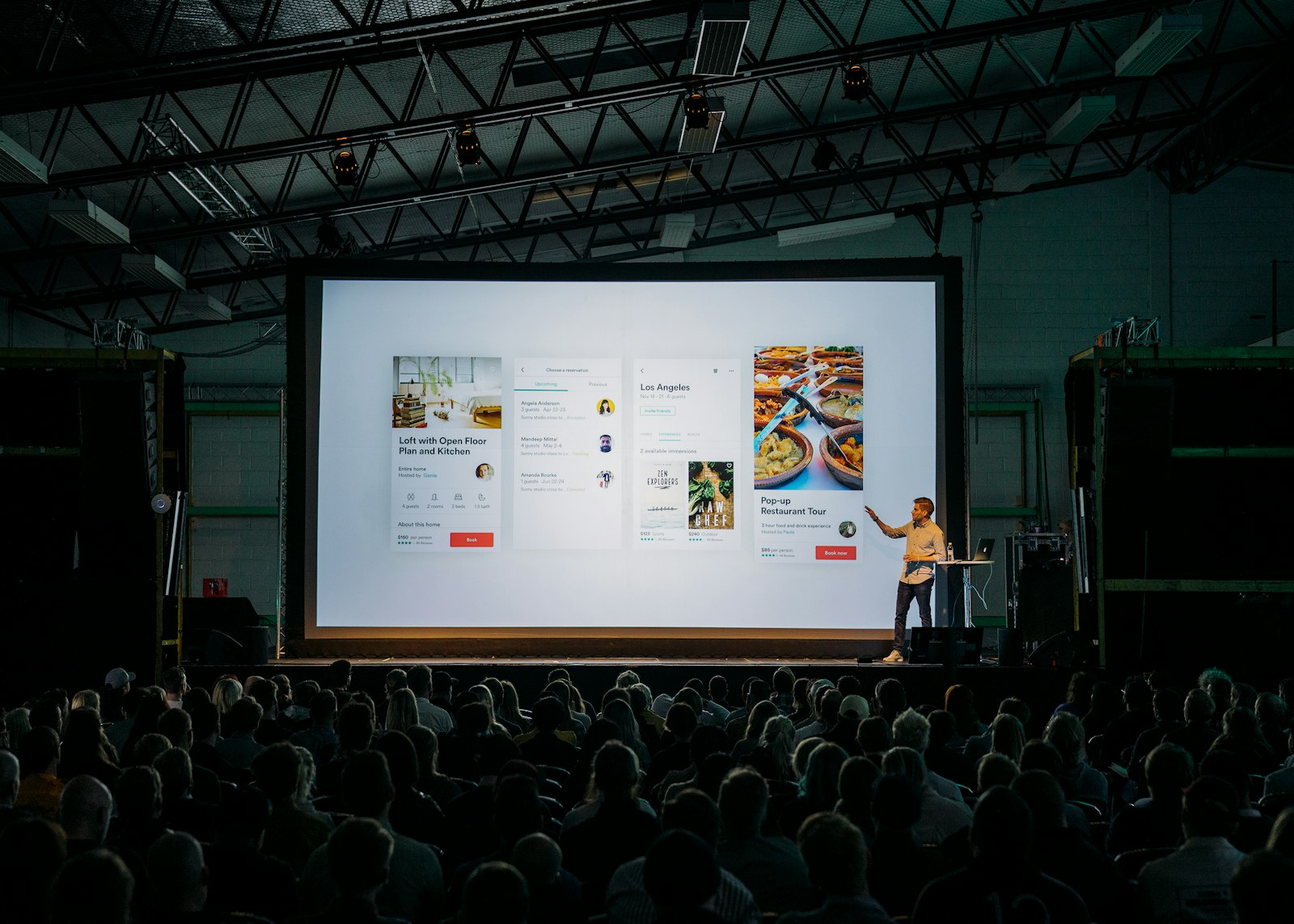
CES is a strange show to design for. The footprints are larger than most teams will build in a year. The lighting is brutal. The neighbors are loud. And the brief, almost always, is some variation of “make AI feel inevitable.”
The 2026 show, January 6 through 9, 148,000-plus through the doors, was less about 4D thrill rides than about quiet engineering choices that paid off across a 50-foot sight line. Five stands stood out, not because they had the biggest spend, but because each one solved a specific problem the rest of us are also solving. Here’s what landed, and what we’d put in our own drawings on the way home.
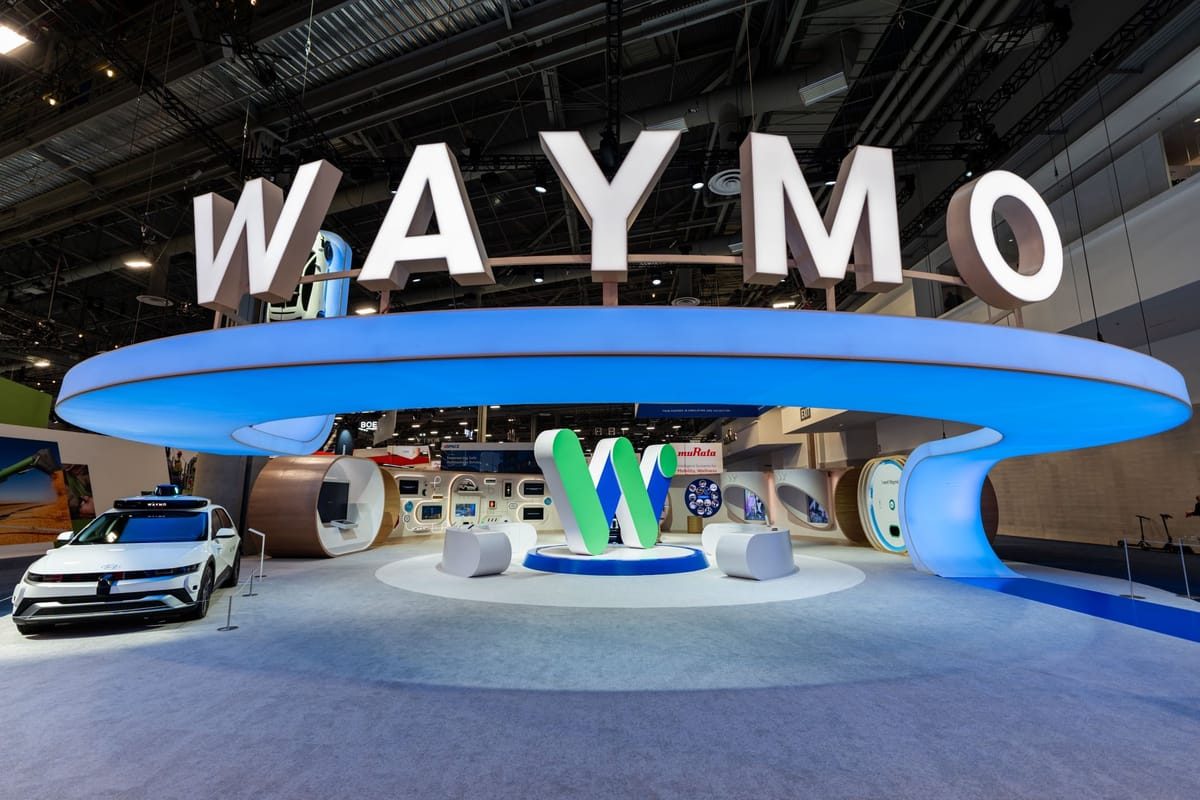
What you noticed first wasn’t the booth. It was the car, a full-scale Waymo vehicle suspended overhead, with a massive rotating logo behind it, visible from halfway across the hall. Built with NVE Experience Agency, the stand used the floating vehicle as the gravitational pull, then routed everything else around the orbit.
Inside, the immersive moments were quieter. A POV experience let attendees see the road the way the Waymo driver sees it, snow, fog, the unexpected pedestrian. The exterior wall ran a playful illustrated animation of a Waymo moving through a montage of cities, doubling as wayfinding for foot traffic two aisles away.
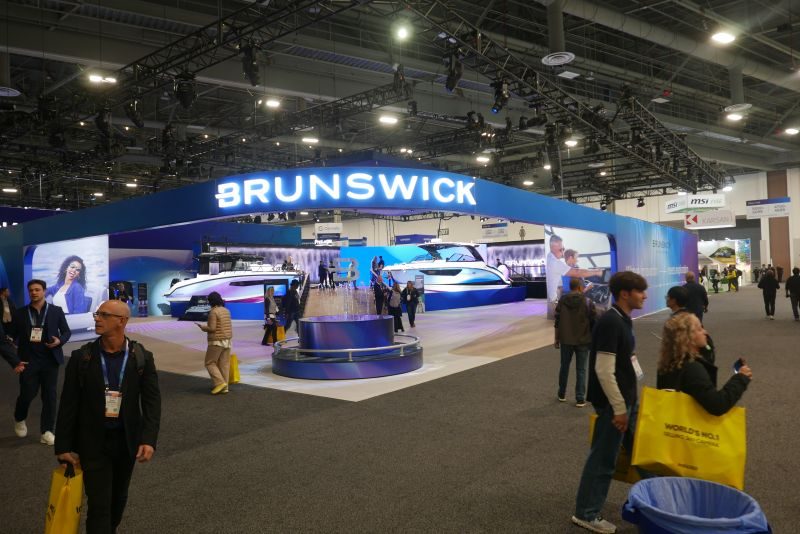
The marine-tech brief is an awkward one. How do you sell boats, on-board AI, and watercraft electrification on a concrete floor, in a building, in the desert. Brunswick’s answer was to bring the water in.
The entrance featured a working fountain choreographed around the ‘B’ logo, not a static feature, but a programmed sequence with synchronized lighting and a matched soundscape. Inside, enormous LED screens carried the flowing-water motif into the product messaging, and wave-like neon lighting was recessed into the floor itself. The Fliteboard electric watersports device made an appearance as the demo centerpiece. Build by Kubik.
The detail we kept coming back to was the sound-buffering panels overhead, easy to miss, almost certainly the reason the whole sensory layer worked.
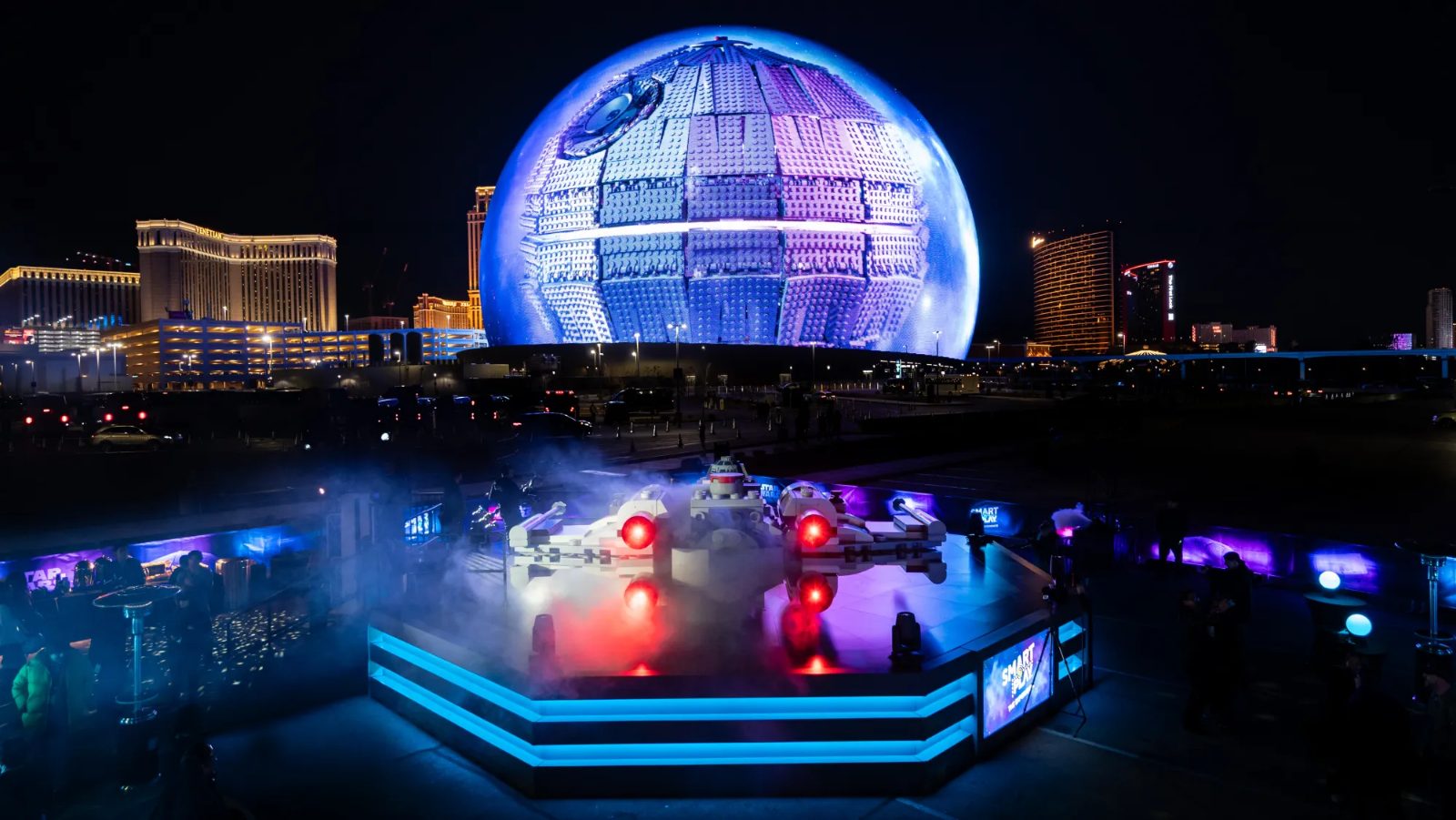
The most-photographed exhibit moment of CES 2026 didn’t happen inside the Las Vegas Convention Center. It happened on the exterior of Sphere, where Lego, Disney Consumer Products, and Lucasfilm transformed the venue into a live, playable Star Wars activation inspired by the original 1977 film.
The most powerful exhibit moment of the show was not, in any conventional sense, an exhibit. The team made a deliberate call. Instead of competing for attention inside a hall with 4,000 other booths, they took over the most-visited screen in the country and let the show floor come to them.
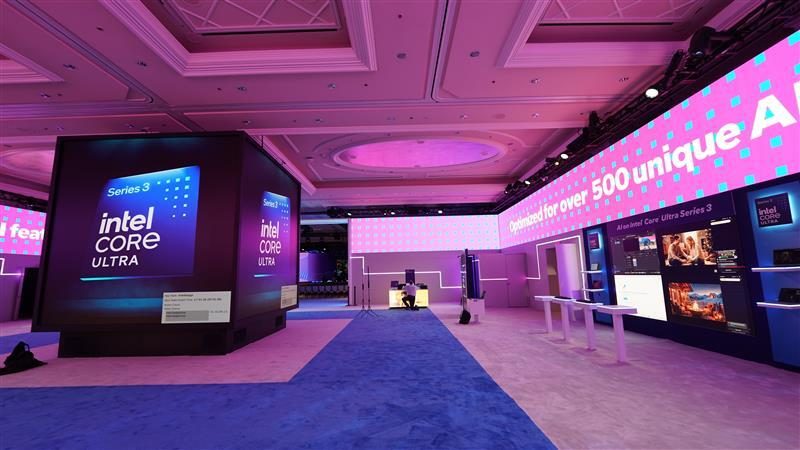
Intel’s CES has been quietly evolving for years. The brand traded its Las Vegas Convention Center footprint for a controlled environment at The Venetian several seasons ago, and 2026 was the year that bet paid off most clearly.
The Panther Lake iconography ran from the keynote stage to the showcase to a wrap of the monorail itself, knitting the brand across the surfaces an attendee would encounter in sequence over a single morning’s commute to the hall. Inside the showcase, a motion-interactive LED cube acted as the centerpiece, visitors triggered the visual content with their own movement, which both demonstrated the product narrative (responsive computing) and quietly self-selected the most engaged attendees into the longer demos.
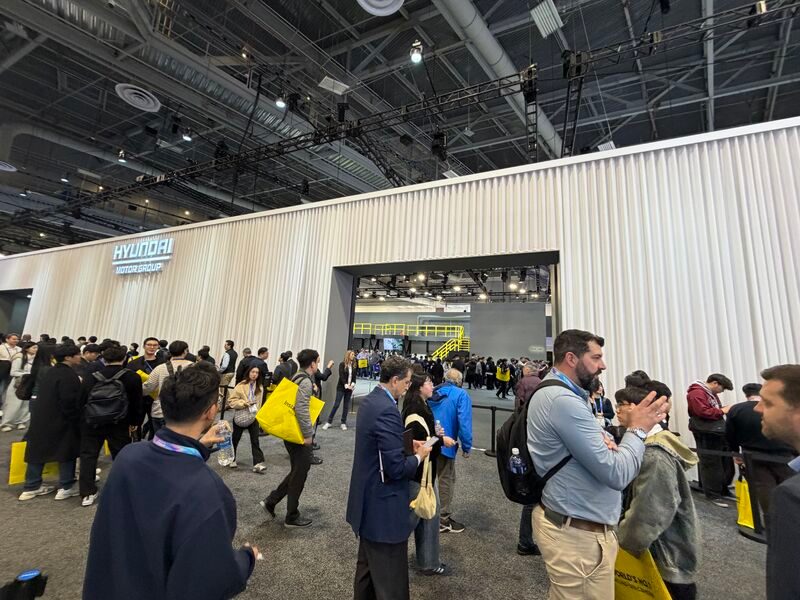
Hyundai’s stand was almost monastic. Unhurried, contemplative, deliberately stripped of the harsh colors and overlapping soundscapes that defined most of the surrounding aisles. And then, at planned intervals, it wasn’t. A golden robot dog navigated a canary-yellow staircase railing. A parking robot lifted and maneuvered a full IONIQ 5. The X-ble Shoulder industrial exoskeleton went onto visitors’ bodies for a hands-on assembly demo.
The architecture did a specific job here. By keeping the baseline atmosphere quiet, the stand turned every demo into an event, a heads-turn moment that felt unscheduled, even though it almost certainly wasn’t.
Five stands, five very different briefs, five answers worth taking back to the drawing board. The honest read on CES 2026 is that spectacle still works, but only when it is pinned to a specific design problem. The Waymo car floats for a reason. The Brunswick fountain is doing acoustic and orientation work simultaneously. Sphere replaces the booth entirely because the booth was not the right answer to begin with.
The stands that did not land, and there were plenty, confused spectacle with strategy. The ones that did treated the iconic moment as the answer to a question, not as the question itself.
We will be in Cologne for IMM next, then Hannover in April. Field notes to follow.
Three or four new essays per quarter on design, sustainability, logistics and the trade-show floor. No promos, no calendar spam.
ONE EMAIL PER QUARTER · UNSUBSCRIBE ANY TIME
