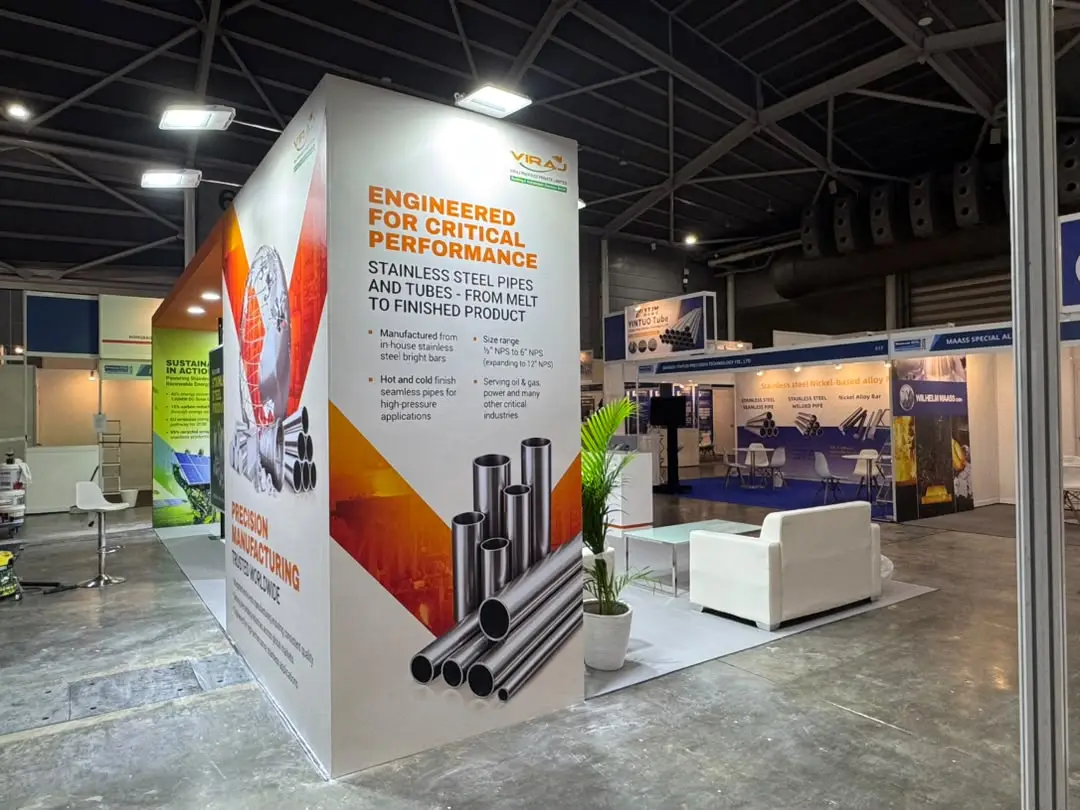
When a company rebrands, the booth is often the first place buyers see the new identity up close. The floor space may stay exactly the same, but almost everything on it has to change. This post looks at what shifts in a booth after a rebrand, what to check before you redesign, and what a well-run build looks like on show day.
Why a rebrand changes the booth, not just the logo
A new logo on an old structure rarely works. A rebrand usually changes colours, typography, tone and the way products are presented. Visitors notice when the booth doesn’t match the website, the brochures and the people standing in it.
Typical gaps between an old booth and a new brand:
- Colours that no longer match the updated palette
- Graphics that carry outdated messaging
- A layout built around old priorities, such as one product line that is no longer the focus
- Lighting and materials that feel dated beside the new identity
Rebrand Reshaped the Booth
When you review a rebrand-driven redesign, compare these points side by side:
- Brand presence: Is the new identity visible from the aisle within a few seconds?
- Message: Does the headline say what the company does now, not what it did before?
- Layout: Does the floor plan support the new priorities, such as demos, meeting areas or a single hero product?
- Materials and finishes: Do they match the tone of the brand, such as precise and technical, or warm and approachable?
- Lighting: Does it show the new brand colours accurately?
- Reuse: Can any existing structure be kept to control cost?
How to redesign a booth after a rebrand
- Start from the brand guidelines. Share colours, fonts, logo rules and tone with your design team before the concept begins.
- Define the booth’s job. Decide the one thing the booth must achieve, such as leads, a product launch or credibility with technical buyers.
- Keep the footprint, rethink the layout. The same space can be reorganised to give the new message more room.
- Approve the design in 3D. Check eye-level views, dimensions and lighting before anything is built. Our 3D visuals page shows what to expect, from 3D designs to look great on screen but fail on the show floor explains what to verify.
- Check venue rules early. Height limits, load rules and technical deadlines can force changes after approval.
- Pick the right structure. Custom exhibition stands give full freedom to express a new identity. Modular exhibition stands suit brands that will exhibit at several shows. For smaller spaces, a well-planned 10×10 booth can carry a new brand with a clear message and strong graphics.
A real example: ready a day early
A redesign only pays off if it is ready and working when doors open. At Stainless Steel World Asia 2026 in Singapore EXPO, we completed a booth for our client Viraj a full day before the show. That extra 24 hours gave the team:
- Calm product and literature setup
- Lighting, screens and power tested before doors opened
- Time for staff to walk the booth and rehearse
- Small snags fixed early, not during the first visitor rush
What made the early finish possible
An early finish comes from the process, not from rushing at the end.
- Design approved early and checked against venue rules
- Quality-checked, labelled components for a clear install sequence
- A supervisor who knows the booth, not just the schedule
- A plan built backward from move-in day, with buffer
This matters most when visitors are engineers and technical decision-makers. A precise, smooth-running booth builds confidence before anyone says a word.
Quick checklist for a rebrand-driven booth
- Brand guidelines shared with the design team
- One clear goal for the booth
- Layout reviewed against the new message
- 3D design approved from visitor eye level
- Venue rules and technical deadlines confirmed
- Components labelled and quality-checked before shipping
- On-site supervisor named
- Build schedule planned backward from move-in day, with a buffer
- Exhibiting abroad? See how we support exhibitions around the world
The takeaway
A rebrand gives you a reason to rethink the booth, not just repaint it. Start from the new identity, test the design in 3D, check venue rules early, and plan the build backward from move-in day. When everything is ready a day early, your team can focus on visitors instead of fixing snags.
Planning a booth for a new brand? Talk to our team and see our portfolio for completed projects.