
VOL. XII · ISSUE 04 · DESIGN, LEAD
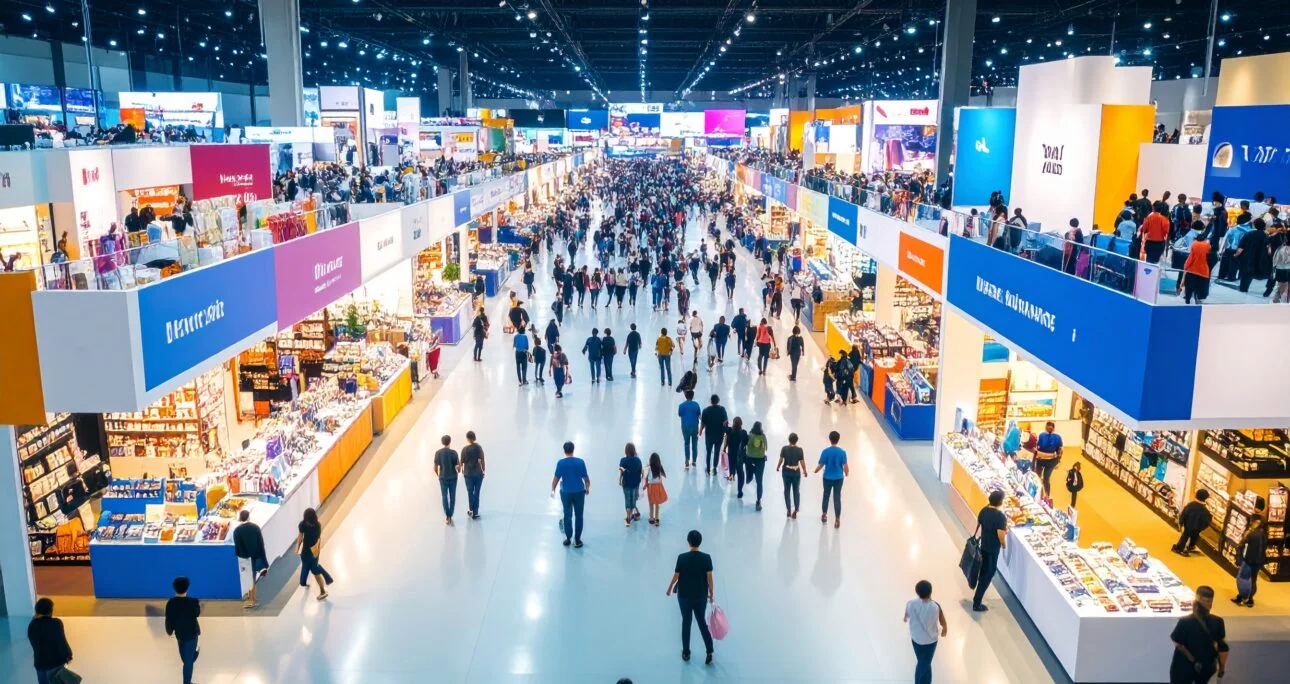
Ask any exhibitor who’s built booths on more than one continent, and they’ll tell you the same thing: the design brief is rarely the hard part. What actually trips up first-time international exhibitors is everything around the design, who’s legally allowed to plug in a monitor, what paperwork your freight needs to cross a border, and which electrical standard your lighting rig has to meet before a venue electrician will even look at it.
Over ten years and 600+ stands built across the USA, Europe, the UK, the UAE, and Hong Kong, we’ve watched the same three regions catch exhibitors off guard in different ways. Here’s what actually changes as you move from a US show floor to a European one to a Middle Eastern one and what to plan around before you ship a single panel.
In the United States, the defining factor in your build isn’t your design, it’s which union jurisdiction your venue sits in. At major convention centers, union labor rules govern who’s legally allowed to perform specific tasks, and the rules genuinely differ by city.
At the Las Vegas Convention Center, exhibitors can typically install and dismantle small booths themselves as long as they don’t use ladders or power tools, but larger structures, anything over 8 feet tall, and all electrical connections require certified union crews, drawn from the Teamsters, Carpenters, Electricians, and Riggers unions specifically. Chicago’s McCormick Place has historically enforced stricter rules across the board, and New York’s Javits Center only permits self-setup without power tools. Straight-time union labor rates commonly run $75–150 per person per hour, with overtime and weekend premiums on top, meaning a labor estimate that isn’t budgeted specifically for your venue can blow past projections fast.
This is also where the timing of your build matters more than in most other regions: union scheduling is tight, advance-order deadlines are firm, and ordering drayage or electrical on-site instead of in advance can add significantly to your bill. Our piece on drayage and the Atlantic gap goes deeper into why moving the same 20×20 stand costs meaningfully more in Las Vegas than in Frankfurt, union labor structure is a large part of that answer.
What to plan for in the US: confirm your venue’s specific union jurisdiction early, budget labor as its own line item rather than folding it into general build cost, and work with a contractor who already holds Exhibitor Appointed Contractor (EAC) status at your venue rather than discovering the paperwork requirement during move-in week.
Europe flips the challenge. Labor rules are generally more flexible than the US, but compliance requirements are considerably more layered and they don’t stay consistent from country to country the way US federal rules do.
Electrical work is the clearest example. Any wiring, lighting, or electronic component used in an EU exhibition stand needs to meet the Low Voltage Directive and carry CE marking, covering equipment operating between 50–1,000 volts AC. That’s a legal requirement, not a suggestion, non-compliant electrical components can be rejected by venue inspectors before a show even opens. Beyond electrical compliance, most European venues also enforce strict fire safety and structural engineering codes that vary meaningfully country to country, and GDPR governs how you collect and store visitor data at your booth, meaning your lead-capture forms, QR codes, and scanners all need visible consent language and secure data handling built in from the start, not bolted on afterward.
Sustainability requirements have also moved from optional to expected across much of Europe faster than in other regions, with several major venues now building environmental standards directly into exhibitor manuals. We’ve written previously about which sustainable materials genuinely reduce a stand’s footprint versus which choices just photograph well, a distinction that matters more in Europe than almost anywhere else, since some shows are starting to ask exhibitors to document it.
What to plan for in Europe: confirm CE marking on every electrical component before it ships, don’t assume a stand compliant for one European country automatically clears another venue’s inspection, and build GDPR-compliant lead capture into your booth plan from day one rather than as a last-minute form swap.
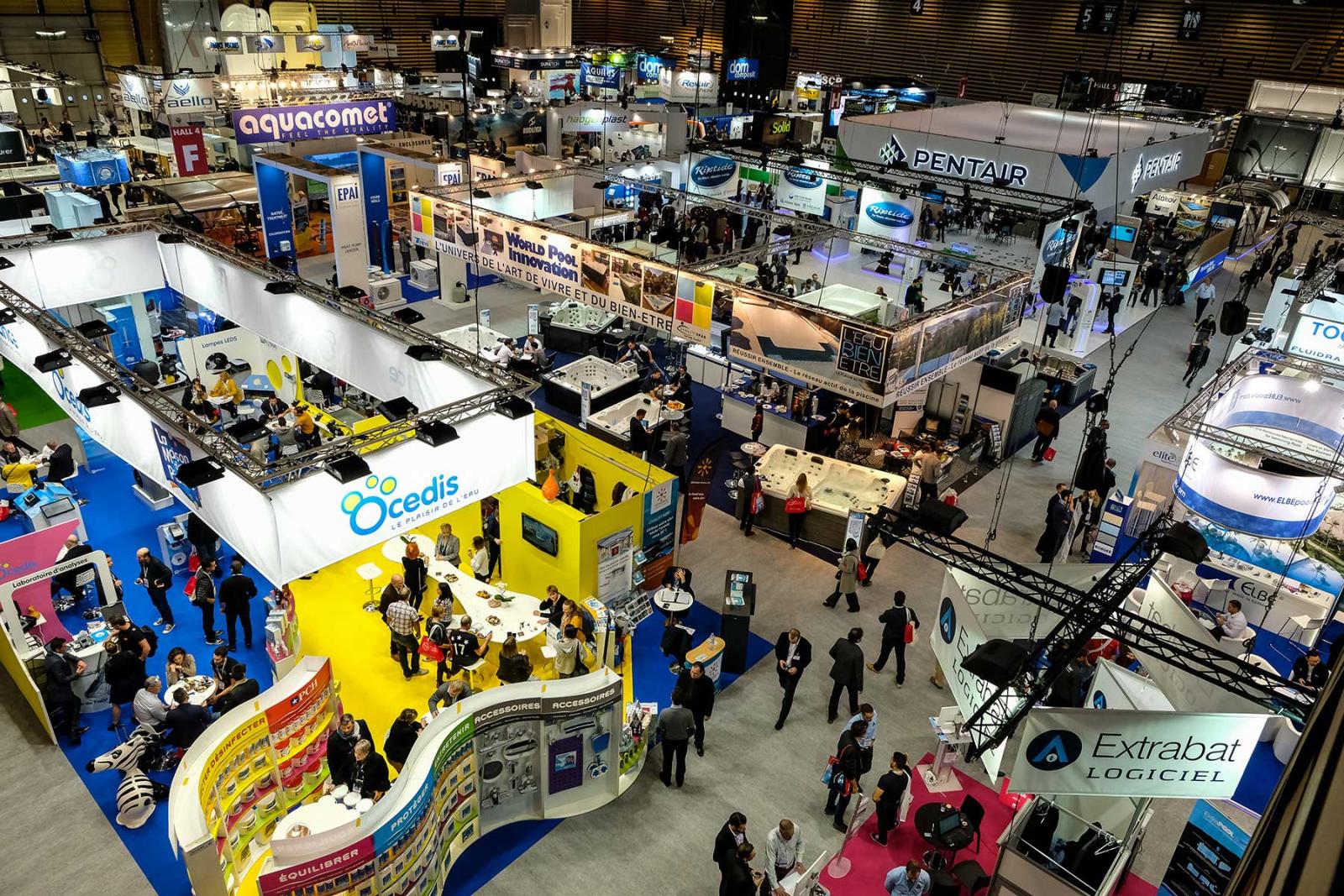
In the UAE and broader Gulf region, the defining challenge shifts again, this time to customs and temporary import documentation. The UAE joined the ATA Carnet system in 2011, and a Carnet is now the standard route for bringing booth structures, product samples, and demonstration equipment into the country duty-free for events like GITEX, Arab Health, or Gulfood. Carnets in the UAE are typically valid for up to six months, and critically, every item declared on a Carnet must be re-exported, leaving goods behind after the show triggers a formal customs claim, duties, and potential penalties.
Where a Carnet doesn’t apply, Dubai Customs requires a Temporary Admission Declaration instead, alongside a full documentation set: commercial invoice, packing list, certificate of origin, and an official letter of participation from the show organizer. None of this is unusual for international freight generally, but the timeline matters, Carnet processing alone can take one to two weeks through your home country’s issuing authority, which needs to be factored into your build schedule well before freight is due to ship.
Compared to the US and Europe, the Middle East’s exhibition infrastructure is also newer and, in many host cities, more centralized, which in practice often means faster, more predictable venue processes once goods have actually cleared customs, but a real dependency on getting that customs step right the first time.
What to plan for in the Middle East: start Carnet or customs bond paperwork the moment your booth design is finalized, work with a freight forwarder who has specific UAE exhibition experience, and never assume goods can simply stay behind after the show without consequences.
In the United States, the primary friction point is union labor jurisdiction. Electrical equipment must be UL/ETL listed, and only small booths can typically be self-installed, usually without power tools or ladders. Key documentation centers on EAC paperwork and insurance certificates, and the main lead time to budget for is advance-order deadlines for drayage and electrical services.
In Europe, the primary friction point shifts to regulatory and compliance layering. Electrical equipment must carry CE marking under the Low Voltage Directive, and self-installation is generally more flexible, though still venue-dependent. Key documentation includes fire safety and electrical compliance certificates, along with GDPR lead-capture consent. The lead time to budget for here is compliance sign-off before shipping, not just freight scheduling.
In the Middle East (UAE), the primary friction point is customs and import documentation. Electrical requirements vary by venue, though both CE and UL certification are commonly accepted. Who can self-install a booth is venue-dependent and less standardized nationally than in the US or Europe. Key documentation is an ATA Carnet or customs bond, along with a certificate of origin, and exhibitors should budget at least one to two weeks minimum for Carnet processing alone.
None of this changes the creative side of a stand nearly as much as it changes the operational plan behind it. A well-designed booth concept can still fail on the show floor if it arrives without CE-marked electrical components in Düsseldorf, gets flagged for missing union electrician sign-off in Chicago, or sits in customs limbo in Dubai because a Carnet wasn’t filed in time. This is also where a full service exhibit company earns its value on multi-region calendars, the same design intent has to be executed through three completely different regulatory and labor systems, and getting any one of them wrong costs real show time.
For exhibitors planning shows across more than one of these regions in the same year, this is also where modular exhibition stands or rental booth systems offer a practical advantage, a structure engineered once, with region-specific electrical and compliance documentation already accounted for, travels far more predictably than a fully custom build re-engineered from scratch for each market. Our worldwide exhibitions directory tracks the specific shows and cities where this kind of regional variation shows up most, from Hannover to Las Vegas to Dubai.
Exhibiting internationally isn’t one skill applied three times, it’s three genuinely different operating environments wearing the same “trade show booth” label. The US tests how well you understand union labor structure. Europe tests how thoroughly you’ve handled regulatory compliance. The Middle East tests how early you started your customs paperwork. Exhibitors who treat all three the same way tend to find out the differences the hard way, usually during move-in week. Exhibitors who plan for the differences in advance are the ones whose booths open on time, everywhere they show up.
Three or four new essays per quarter on design, sustainability, logistics and the trade-show floor. No promos, no calendar spam.
ONE EMAIL PER QUARTER · UNSUBSCRIBE ANY TIME
