
VOL. XII · ISSUE 04 · FIELD NOTES
FIELD NOTES · CES 2026
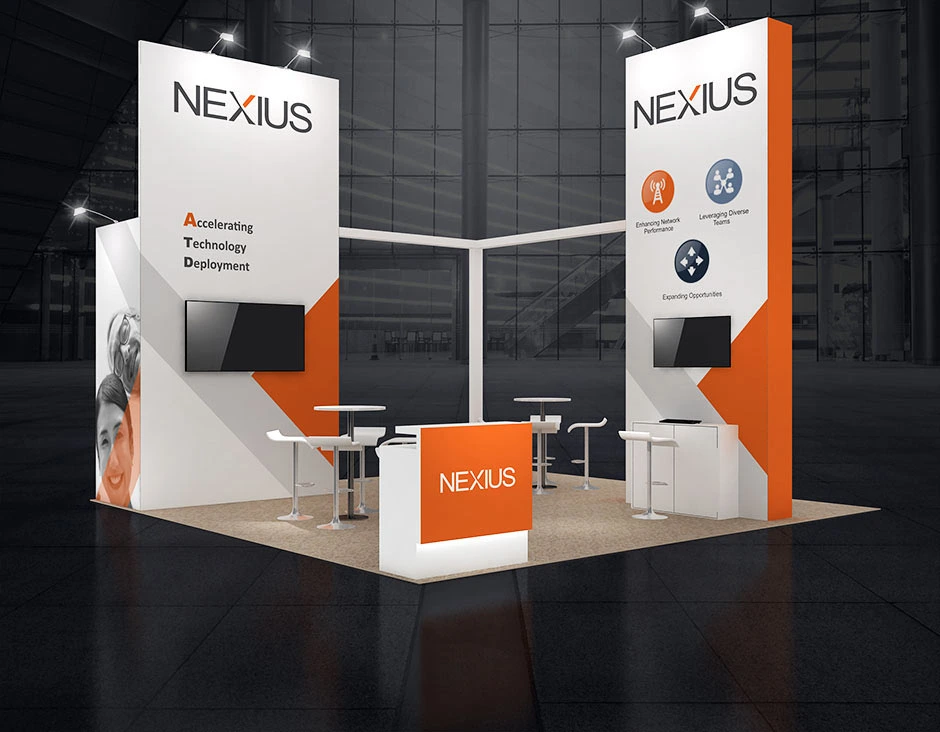
Most exhibitors ask the question the wrong way. They compare the price of a rental quote with the price of a purchase quote and pick the lower number. The real question is: how many shows will this booth work at, and what does each route cost across all of them?
Renting is the right call for plenty of exhibitors. But there’s a point where rental fees quietly add up to more than owning, and many teams pass it without noticing. This guide gives you a simple way to find that point for your own calendar.
A purchase quote shows one big number. A rental quote shows a smaller number that repeats. The costs that decide the answer sit outside both quotes:
Until you add those up, you’re comparing a headline price with a partial one.
If you buy
Storage. A booth needs a dry, secure place to sit for the 50 weeks a year it isn’t on the show floor. Third-party warehousing is an ongoing line item, and it grows with the size of your stand. Our Store & Reuse service exists because tracking components, barcoding panels and keeping them in good condition is a job in itself.
Refurbishment. Panels get scuffed, finishes wear and fabric graphics age. On a reusable system, the structure lasts for years, but fabric typically needs replacing every several cycles. Budget for it from day one.
Freight and handling. Moving a booth to each venue costs money every time, whether you own it or not. Cross-region shows add customs, drayage and handling charges. Our post on drayage and the Atlantic gap explains why the same booth can cost far more to move in one city than another.
Capital tied up. Owning means paying upfront for something that only earns its keep on show days.
Risk of mismatch. If your next show assigns a different booth size, a stand built for one footprint may not fit.
If you rent
Repeat fees. Each rental carries its own fee. Over a calendar of shows, those fees can pass the cost of owning.
Inconsistent brand presence. A different rental every time can mean a different look every time, which weakens recognition.
Less control. You work within the rental system’s structure rather than owning every element of the design.
Peak-season availability. Popular rental inventory fills fast, so late bookers can have fewer options.
The upside is real, though. Rental avoids storage, avoids capital outlay and adapts to a changing calendar. Our rental booth service is built around that flexibility, with custom branding on a reusable chassis so a rental doesn’t look like one. BuilderDeck’s rental page cites around 40% cost saving versus rebuilding a booth for every show, which is the comparison that matters if your alternative is building new each time.
Here is the simple version. Compare the two routes over the same period, usually three years, which is a realistic life for a well-built booth.
Total cost of owning = purchase cost + storage + refurbishment + (per-show freight, install and graphics × number of shows)
Total cost of renting = (rental fee per show, including whatever it covers) × number of shows
Where the two lines cross is your break-even point.
Use these as starting points, then check them against real quotes.
1 show a year, or one-off events: Rent. You avoid storage, upfront cost and long-term commitment. This is also the right route if you’re testing a new show or region.
2-3 shows a year: This is the grey zone. Run the break-even math. If your booth size and brand are stable, owning may start to win. If your floor plans change often, a rental or modular kit may still be smarter.
4+ shows a year: Owning, or a managed reusable system, usually wins on cost and brand consistency, provided your booth size stays reasonably predictable.
Rent-or-buy isn’t a binary choice. For exhibitors with several shows a year and varying floor plans, a modular exhibition stand gives you ownership benefits with rental flexibility. One reusable frame can resize across footprints, and only the graphics and props change per show. Our modular exhibition stands are designed around this model, with BuilderDeck citing 35%+ lower average cost per show compared with building new for each event, based on a three-show annual calendar.
If you own a booth, storage and reuse removes the biggest hidden cost: a managed, catalogued warehouse that keeps components inspected and ready to redeploy.
Numbers decide most cases, but these questions break ties.
Break-even only works when your inputs are realistic. Our blog on custom exhibition stand cost walks through realistic ranges, so you can plug better numbers into the framework above.
Also be careful whose quote you trust. Our post on red flags when choosing an exhibition stand builder covers vague quotes and missing line items, which are exactly the ones that skew a rent-vs-buy comparison.
Whichever route you take, look at the booth before you spend. 3D visuals show your stand in context, so you catch problems on screen instead of on the show floor. It’s especially useful when you’re about to commit to a purchase you’ll live with for years.
At how many shows a year does buying a booth make sense?
Often around three or more shows a year, but it depends on booth size, freight and your rental pricing. Run the break-even math with real quotes.
Does a rental booth have to look generic?
No. A custom rental is designed around your brand and built on a reusable structure, so visitors shouldn’t be able to tell it’s a rental.
What costs do exhibitors forget when buying a booth?
Storage, refurbishment, repair, freight between venues, and replacement of worn graphics or fabric.
Is there something between renting and buying?
Yes. A modular, reusable stand with managed storage gives you most of the cost benefit of ownership with the flexibility to resize for different shows.
How far ahead should I decide?
The earlier the better. Starting 6 to 8 weeks ahead works for smaller booths, and larger stands need considerably more time.
Send us your upcoming shows, booth sizes and regions, and we’ll help you compare renting, buying and a modular system with realistic numbers, with no pressure to choose any one route.
Three or four new essays per quarter on design, sustainability, logistics and the trade-show floor. No promos, no calendar spam.
ONE EMAIL PER QUARTER · UNSUBSCRIBE ANY TIME
